2023 MLB Predictions

Some people know this, but a few years ago I was given a full set of miniature MLB team helmets and a board to display them in the order of the standings. The board wore out quite quickly, but I replaced it with a couple of little cases from Amazon, and I usually update it about once a week during the season. (Less often in early April, since the standings are so volatile that time of year.) Before the season though, I set them in the order of my predictions for that year, and I usually write some breakdown of why.

This year, I strongly considered building a full ‘objective’ model to make the predictions for me, but objective in the sense that MLB Network’s Top 10 Right Now lists are advertised as being objective and unbiased. Yes, they came out of a computer, but there’s subjectivity and bias in what goes into the model. Brian Kenny’s abject inability to understand this and many other things will be a post at some point. Unfortunately, I had this idea at about eleven o’clock this morning and even if I didn’t have to work, that really isn’t enough time to build even a satirical model. That said, I did find a couple of interesting things that factor into these predictions and might go into future models:

  • Teams average eleven fewer wins the season after having a player hit sixty or more home runs without gratuitously cheating. Did I look this up just because I wanted an ‘objective’ way to lower the Yankees in the model? Yes. Admittedly, it’s not unreasonable to think there might actually be a connection there, as the team’s win total was probably boosted by a performance that is unlikely to be repeated, but also it’s only happened twice and both times the team really had nowhere to go but down the following year. (Which is why I looked this up in the first place.)
  • According to this paper, teams who change managers have a boost in winning percentage equal to about five wins over the course of a season. The teams with new managers this year are Miami, Texas, Kansas City, and Chicago (AL). I didn’t see anything for the effects of a new GM or pitching coach, but either way there’s something of a boost for the Royals.

Anyway, these predictions were all done by a neural net that has been trained inconsistently for more than thirty years and hates the Yankees. If they’re right, the neural net will be given positive feedback in the from of smugness and beer and if they’re wrong the neural net will get negative feedback in the form of annoyance… tempered by beer.

American League
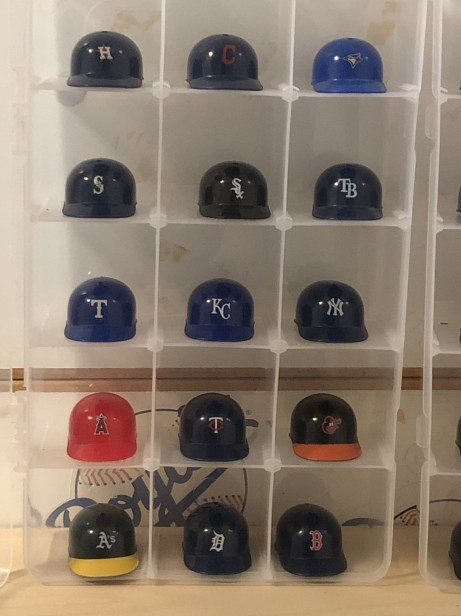
IMG_3809

AL East

  1. Toronto (95-67)
  2. Tampa Bay (90-72)
  3. New York (85-77)
  4. Baltimore (82-80)
  5. Boston (80-82)

I didn’t want to put the Blue Jays in first. I really didn’t. Maybe it’s a lingering resentment for how ungraciously they took losing the 2015 ALCS, or maybe it’s how much they’ve been hyped for over three years without really doing anything to earn it, but they annoy me. However, John Schneider did seem to take them from a quasi-functional group of individuals with decent talent to an actual team that can win games. (Win games in the regular season, anyway.) So fine, they get first. The Rays should make it a race, as they usually do. I thought about putting them in first, but it really would have been one of those ‘thy wish was father to that thought’ placements and I try to limit myself to only applying that to teams I really like or hate. The Rays, by their standards, struggled a bit last year. I would not bet against that being an anomaly, but they did lose some of their coaching staff this offseason and are swimming against the tide of the new CBA. Between the Yankees‘ 99 wins last year already being an overperformance for a team that looked hapless for a lot of the season and the aforementioned eleven game penalty for the year after a sixty home run season, they get third and can thank me for it. The Orioles and Red Sox could really go in either order. They’ll both probably be at least decent, but both are fairly uncertain. Baltimore have the issue that teams which took as big a step as they did last year usually need a year to at best consolidate while they react to other teams adjusting. Boston spend the first part of the winter trying to tank, then remembering they were the Red Sox and having an okay winter in the end. I don’t think it’s enough to really compete though, and I think the Orioles have a better chance.

AL Central

  1. Cleveland (92-70)
  2. Chicago (90-72)
  3. Kansas City (80-82)
  4. Minnesota (72-90)
  5. Detroit (57-105)

The AL Central is, as has been the case for several years now, a pretty weak division that really just needs one team to play well to finish first. Last year that was the Guardians and I don’t see any real reason why it shouldn’t be again. They were a young, pretty balanced, team that should be at least at the same level this year. They do have the same issue I mentioned with Baltimore that it tends to be hard to take another big step after the one they took last year, but unlike Baltimore, they don’t need to do much more than consolidate the gains they made already. The White Sox could put some pressure on them though. The White Sox have spent years acquiring individually talented players who played as individuals, completely skipped the fundamentals, and could be relied upon to underperform. That might change under Pedro Grifol. He’s not a miracle worker, obviously, but he has an attention to detail that has been very lacking in Chicago. I could see him doing with the White Sox what Schneider did with the Blue Jays and if that happens the Guardians might actually have to take another step this year. I could write a whole section for the Royals, but they also should benefit from a managerial change and I really think the boost from getting rid of bad leadership both in the coaching staff and in the form of toxic players is underrated. The Twins are hard to call. They arguably had a better year last year than their record makes it look; they were in the race late until a horrific collapse down the stretch. But at the same time, the Twins have seemed to defy gravity for years. I’m not convinced that the collapse was the anomaly. They don’t look like a substantially improved team from last year, though they’ve been proactive about shoring up some possible weak spots. I’m just very, very unconvinced by them and that’s without even factoring in the possibility that Carlos Correa has a season-ending injury at some point. I’m not that kind of doctor, but given how skittish his medical report made teams, I wouldn’t want to rely on him to carry the team. And then there’s the Tigers. I was tempted to leave it at ‘The Tigers also play in this division’, but I want to mention how completely baffled I am by their approach. They seemed to be really going in on a rebuild centred around some decent prospects. And then they also went and spend big money on the most over-rated player in the league, Javy Baez. I know I call a lot of players over-rated, because players in big markets do tend to be more highly rated, but no one really compares to Javy Baez. His season last year should not have been a shock. What was a shock was that the Tigers seemed to abandon their rebuild to give him over $20 million per annum. Now they’re stuck with that and prospects who might still develop, but who are at least a year away still.

AL West

  1. Houston (104-58)
  2. Seattle (93-69)
  3. Texas (74-88)
  4. Los Angeles (70-92)
  5. Oakland (48-114)

Just after the All Star Break in 2009, the Royals had a stretch of six games—all at home—in which they took a lead into the eighth inning four times and lost all of those games. There was a grim inevitability about the bullpen in those days. I mention this because it’s the same grim inevitability about the Astros winning the AL West. I don’t want it to happen, no one outside the Houston area wants it to happen. But although the Astros have weaknesses, they’re all the sort of weaknesses that might be a problem in a short playoff series, not a problem getting there in the first place. The race for second place is fairly open. The Mariners have been playing well for a few years and they finally turned that into a playoff berth last year. The system they built looks sustainable for a while, so they’re probably favourites for that runner-up spot just by default, but also I don’t see the other three teams as having improved enough to close the gap. The Rangers spent big in the offseason after having a miserable couple of years. They look like they’re really trying to test the extent to which a team can just buy their way into contention under the new CBA. I don’t think they spent particularly wisely though, and in any case they’d have to actually spend as much as the Mets to go from 68 wins to contention. Changing managers might help, but I’m also not sold on bringing someone out of retirement. I think they’ll be better than last year, but I’m not really predicting them moving into third place as much as I am predicting the Angels moving out of first place. The Angels have a couple of really good players you’ve probably heard of, the problem is the other 24 are average at best. More importantly, the Angels front office looks all at sea, though they’re hamstrung by the uncertainty around the ownership. Either way, I just don’t see them improving from last year, and probably sinking further. And then there are the A’s. I don’t even know where to begin with the A’s, partly because I don’t actually know without looking it up who is still on their team. I feel sorry for their fans and pretty furious at their owner, John Fisher, who is damaging the whole structure of major league baseball. The whole thing is a mess.

National League

IMG_3808

NL East

  1. New York (104-58)
  2. Atlanta (102-60)
  3. Philadelphia (87-75)
  4. Miami (75-87)
  5. Washington (54-108)

Oh, while we’re on the topic of terrible owners making the sport worse, we have the Mets‘ Steve Cohen. Just because he’s going about it the other way doesn’t make it any less damaging. Much as I hope his attempt to go full Monty Burns fails, it probably won’t. The Braves should also be very good again. I’m not convinced that they’re a better team than last year, but they also won 101 games last year, so basically carrying that forward would normally be enough. Then there are the Phillies. The Phillies are hard for me to judge. They’re the defending NL Champions, but they’re also coming off an 87-win, third-place regular season and only made the expanded playoffs on the last weekend of the season. On the one hand, I want to give them credit, and say that the grand strategy of buying every DH to slug their way into an expanded postseason did actually work. On the other hand, it’s really hard to know if that will work consistently. (And also, I hate that being a viable strategy.) They added even more hitting over the winter, but I don’t know how much that moved the needle. It doesn’t really matter in their division. They’re not finishing above third unless one of the teams above them collapses and they’re not finishing below third unless one of the teams below them makes a miracle run. But the divisions don’t really matter in MLB now, and a few games here and there might make all the difference in the wild card race. The Marlins always feel kinda irrelevant (which has been fair a lot) but I think they’ll be a little better than last year and better than the lack of attention would indicate. They still have the reigning NL Cy Young award winner and made some other minor upgrades over the winter. But they’re also going to be outclassed by the division and league. The Nationals should play a full 162 games and continue their tribute to the old ‘first in war, first in peace, last in the American League’ Washington Senators.

NL Central

  1. St Louis (91-71)
  2. Chicago (84-78)
  3. Milwaukee (80-82)
  4. Pittsburgh (63-99)
  5. Cincinnati (61-101)

There are five teams in this division. Five! It seems like a lot, given that none of them really seem like a division winner to me. I’m going with the Cardinals; they still have some good players and anyway they just seem to always find a way to win the division, no matter how annoying it is. But they also feel like the shell of a good team. I’m going with the Cubs to make a big leap and move into second place in the division. I’m not super comfortable with making that prediction, but it’s partly a reflection of the other teams in the division. The Cubs did improve though, and having a solid defensive shortstop I think will really help them. The Brewers are an extremely frustrating team. They’re talented and they’re not that far removed from being a game away from winning the NL pennant. But they just seem uninterested in winning. I can’t understand their front office at all and that disfunction seems to bleed down to the team itself. The Pirates and Reds will prop up the table again; they finished tied last year and they seem very similar again this year. I think Pittsburgh have a bit more talent in the end, but they also have some leadership issues—Ke’Bryan Hayes taking his glove off to eat sunflower seeds whilst watching a play unfold around him is the prime example—so they might cancel out again.

NL West

  1. Los Angeles (98-64)
  2. San Diego (92-70)
  3. Arizona (80-82)
  4. San Francisco (77-85)
  5. Colorado (64-98)

Almost done! The Dodgers are not the team they were a year ago, but also the team they were a year ago won one hundred and eleven games. They won the division by twenty-two games. They don’t have to be the same team they were a year ago, at least in the regular season. The Padres are also basically the same team as last year and not really that different to the team they were the last few years. They won 89 games last year and haven’t won more than ninety games in a year since 1998. Even if they’re a little better than last year and even if the Dodgers are reasonably worse, it’s hard to think that San Diego aren’t playing for a wild card spot again. But there are a lot of those, so maybe it’ll work again. I actually put the Diamondbacks in third place. Partly because it felt too much like phoning in the last division to just set everything the same as last year, but they also really do have some decent young players. What I saw of them last year looked like a better team than the 74 wins they actually got. The Giants by contrast, looked like a worse team than 81 wins last year. I do think they improved in the offseason more than the big near-misses made it seem, but there’s only so much their pitching staff can do. And then I had to put the Rockies in last. I wish I could just quote some of the Rockies fans I’ve talked to over the last few months here, because they tore apart their front office more thoroughly than I could.

I’m not going to try to predict the postseason, because those short series especially are very unpredictable even when they start. But even in the extremely unlikely scenario that these are actually the playoff teams, there’s really no way to know what the rosters will be by October. That and it’s late and I’m tired and I want to work on my scorecard. (To be revealed tomorrow!)

Two Ways to Improve the World Baseball Classic

To start with, I like the World Baseball Classic. It’s fun, and it was genuinely tremendously exciting when Great Britain qualified. I also think most of the standard criticisms are a little overplayed. But at the same time, I am way more apathetic about it than I am about almost any other international tournament. It’s fun, but I was shocked when players were comparing it to the World Series. I would rather see the Royals when the World Series than… well, almost anything, actually. Insofar as the World Baseball Classic is meant to be a World Cup, it does not stand close to the Football, Rugby, or Cricket versions. I was thinking about why that is, and how MLB can make it better. Obviously this is my personal take on it; clearly a lot of people love it as-is and I don’t want to dismiss that. But I think there are a some lessons that MLB could learn from the three big World Cups (especially the Rugby World Cup, because I think that’s probably the closest analogue) that would make it better, even for the people who already love the tournament.

The biggest issue is that the World Baseball Classic is not localised. There is no host nation or nations like for other World Cups. I get the reason why; this way teams like Japan and Korea can play in front of their home fans, which otherwise never happens. That’s pretty cool! But the big problem with this was highlighted by a Tweet this morning from JP Morosi

Statistically this could be a coincidence, of course. Five straight is not many. But at the same time, it is a 13 hour flight between games. It would be like if the Cricket World Cup had a quarterfinal at Old Trafford and the winner had to play the semifinal at the SCG five days later. That’s ridiculous in any tournament, or even just a normal tour. At this stage no team should have a structural advantage. That doesn’t mean Japan won’t overcome it (though as I write this they trail 3-0), but it’s not a hurdle they should have to face.

I also think there’s an underrated aspect to how much having a host country makes it an event. The spectacle of seeing all the players converging on one spot, a big Opening Ceremony, and that sense of ‘the eyes of the world are on this’. There’s also the aspect of matches being on a pretty regular schedule. As a fan you can settle into a nice pattern of just looking to see what game is on in what time slot that day and I think that makes it a lot easier to watch and see new teams. For instance, during the Rugby World Cup if I look and see that the match on in the most watchable time slot is Romania v Tonga, then I’m watching Romania v Tonga, never mind that I don’t know any of the players. The distributed nature of the WBC doesn’t allow this; in this WBC I turned on Israel v Venezuela in the sixth inning because I had no idea what times the games were on.

This seems like the easiest place for the WBC to improve. The number of potential hosts is much closer to cricket or rugby, so hosting would be a once-in-a-generation thing, not a once-in-a-lifetime thing. You can grow the game and improve the tournament, and I really think MLB should do this for the next edition.

Another thing MLB might look at is the timing. I feel less strongly about this than the hosting of the tournament, but I do think running concurrently with Spring Training hampers the tournament a little bit. Not only are the tournament games not the only ones being played, you also still have things like pitch limits as players still build up for the regular season. If this is meant to be a World Cup, then there can’t be those sort of restraints. Of course, the clubs who actually pay the players and have the biggest stake in their health would never buy into letting them go 100% in mid-March. So maybe play it in late November/early December instead. It’s not ideal, but baseball players are so professional now that if they wanted to—and it’s clear that a lot of them do—there’s no reason they couldn’t still be conditioned at that stage of the year.

The obvious counterpoint is that the weather sucks in November and the players will be tired after a long season. But there are domed stadia in the northern hemisphere and if someplace like Australia hosted then the weather would be fine. And I don’t think the players being tired is worse than the players being not yet fully conditioned. The latter is something that can be worked through, but the former gives the group-stage games a very Spring Training feel. It’s also worth noting that the Rugby World Cup does actually take place near the beginning of the northern hemisphere season and it’s not really an issue. Playing in April might actually be the long-term solution, but in the short-term I don’t think it’s feasible to adjust the MLB schedule enough—there’s not enough leeway—and there would certainly be a lot of pushback. I think November/December would be best; there’s no other baseball on then and the human rights abuses World Cup last year showed there is a niche for a big tournament at that time of the calendar.

This does get to the limit of what baseball can learn from other World Cups though. All World Cups are unique because all sports are unique, but there are a lot of things about baseball that just don’t have an analogue in any other sport. One is the marathon, every day, nature of the baseball season. This makes scheduling the tournament hard, but it’s also an integral part of the game that—much like Test cricket—does not lend itself to a knockout tournament. Also, rugby and cricket have many domestic leagues that all have about the same stature, which adds to the global feel of any international match. Baseball really just has MLB* and with all the best players already in the same competition it does take some of the uniqueness away. The WBC is way better than the All-Star Game, but also there’s a reason the All-Star Game is a shell of what it used to be**. Approached smartly, I don’t see either of those as being things that will make the WBC worse, just different. But MLB does not have a great track record of approaching things smartly, and one glance at the history of the Cricket World Cup shows a number of ways things could go very badly.

*There’s a case to me made for the Japanese leagues being comparable to MLB. Obviously this is something that can’t really be quantified, so your mileage may vary, but since the best Japanese players still come to MLB I don’t think the Japanese leagues currently have the same stature. It’s not obvious though.

**I actually think one of the cool things about the WBC is that it taps into some of what made the ASG cool before the differences between the leagues were eroded. But it does make for a bit of a caution for MLB to not let this go the same way.

Lastly, I do want to make it clear that I don’t think the complaints about injuries have legs. This is the kind of tired complaint I always hear and I think it’s pretty short-sighted. I’m sure Mets fans disagree and I don’t really blame them because there’s no reason they should care about anything other than what is good for the Mets, it’s in the definition of ‘fan’. I’m sure I would be furious if Bobby Witt Jr, Brady Singer, or Salvador Perez got injured. But I would hope I would also rememeber that Salvy also got injured slipping carrying his luggage a few years ago. Someone—and I forget who—got injured falling through a roof one offseason. Weird things happen and weird injuries happen and you can’t blame the context. The WBC is a good tournament, and I think some small changes could take the it from a good tournament to a more universally-recognised centrepiece of the game.

The new schedule is easier for the Royals, but MLB still somehow scored an own goal

This started as part of the post on the rule changes, but then I realised it was really its own category. As part of the new CBA, MLB released what I keep hearing described as ‘the new balanced schedule’ late last year, with expanded interleague play and less intra-division games. The first thing to note about it is that it isn’t actually balanced, it’s just less unbalanced than the schedule that’s been used since 2013. Teams still play their own division more than anyone else, for example the Royals play 13 games against Detroit next year and 15 games total against the entire NL West. The fact that this seems to continually escape the notice of analysts is kind of baffling to me. The other day on MLB Network they were talking about how it would be harder for the Royals next year, playing fewer games against the AL Central and more against the big teams in the National League. I get why, on the face of it, one would think that, if the schedule were actually balanced. But it’s not. Yes, we play the Tigers six fewer times, but we also play Cleveland six fewer times and the games against big teams like Los Angeles and San Diego are balanced out by games against Pittsburgh and Cincinnati.

Of course, we can quantify this instead of just vaguely saying there are good teams and bad teams. This is a bit of a digression, but I like numbers and analysis, so if you want to skip the next couple of paragraphs I don’t blame you. Under the old schedule the Royals would be playing the NL East in interleague play, plus four games against St Louis, our ‘natural rival’. (Much more on this later, because it’s surprisingly important.) We’re still playing the NL East, and also playing three games each against the five teams in the NL West and the other four teams beside St Louis in the NL Central. Those extra 27 games mostly come from playing six fewer games against the other four teams in the AL Central, though we actually also play one fewer game against the NL East than we would have under the old schedule. That leaves two games unaccounted for, as far as I can tell they come from playing one fewer game against each of the AL East and West. There’s always a random element to which of those teams we played six or seven times, so there’s no way to know exactly which teams we would have played one extra time. That makes for a bit of uncertainty, but uncertainty always exists and it is important to acknowledge it and ideally quantify it, not just ignore it.

The standard way to judge strength of schedule is to just aggregate the winning percentage of the opponents weighted by number of games and compare before and after. This has the advantage of being simple, but it doesn’t really work because it blurs the distinction between how good (or bad) a team is and how many times you play that team. For example, The Los Angeles Dodgers were 111-51 last year. The two teams at the bottom of the NL West, Colorado and Arizona, were 68-94 and 74-88, respectively. The combined winning percentage is above .500, specifically .521, but if you played each team the same number of times—as the Royals do next year—that’s twice as many games against teams below .500 than above! Clearly averaging winning percentage doesn’t work. Instead you have to classify opponents (which you can kind of see in that above example—teams were classified into above and below .500) and see how the number of games against different classes changes. I’m going to use 70 wins as that’s decently close to the Royals win total last year. The only important thing is that a game against Cleveland or Detroit counts the same as a game against Los Angeles or San Diego. Of the 27 games lost from the old schedule, the Royals had at least six against teams with fewer than 70 wins last year, the six against Detroit. There might also have been two more, depending on which teams in the AL West and NL East we would have played one more time. (The AL East had no teams with fewer than 70 wins, so it doesn’t matter.) Of the 27 games gained under the new schedule, we actually have nine such games, against the Reds, Pirates and Rockies. It’s a pretty small difference, but the schedule is actually slightly easier for the Royals next year. Again, that 70 win number is an arbitrary one. But the answer actually doesn’t change even as you move the threshold around: The more balanced schedule is at worst the same and at best slightly easier for the Royals in 2023.

It’s also important to note that the Royals would normally play the NL East next year, which had two 100-win teams and an 87-win team, so the comparison might be different in 2024. But it’s useful to demonstrate two things. One is how superficially a lot of the analysts are approaching the new schedule, which bugs me. The other is how small the actual difference in strength actually is. It doesn’t really matter, and that’s without even getting into the fact that even a lopsided matchup in a single baseball game is a lot more even than most other sports.

Anyway, I’m not nearly as annoyed about the change itself as I am with the discussion about it. I have nothing against playing all 29 teams in a year. I’m enough of a traditionalist that I don’t really like interleague play and now that the DH is universal (grumble) there’s no extra appeal to playing in an NL city. But at the same time, I remember when I was a kid and how excited I was to see teams and players that I had never seen before come to the K. I always insisted we go to the game when there was an NL team in town. And I still like seeing new teams come to town. I have a goal of seeing every team play in person, which I’ll be able to achieve a lot quicker now. So I’m fine with that.

But.

MLB did not do a good job of actually implementing this change. To be fair, it is hard to build a good schedule for all thirty teams, especially without changing the total number of games, which at this point is probably a non-starter*. But this year the Royals have back-to-back off days at the end of May/start of June and a Sunday off day in August. Back-to-back off days are annoying, but not really an issue. The issue is a Sunday off day. I know that way back when there were Sunday off days and Monday double headers, but that’s not what’s happening here. This is just a Sunday afternoon in August with no baseball, which ought to be illegal. (And I don’t mean against MLB rules, I mean there should be a federal law against this, along with the Constitutional amendment banning Astroturf and the designated hitter.)

*I say this because 162 feels like one of the game’s sacred numbers now, but emphasis on now. For almost sixty years the season was 154 games long, and it was only changed to 162 because of the change in the schedule necessitated by expansion to ten-team leagues—it was a balanced schedule of 18 games against each of the other nine teams. But when the leagues continued to expand the length stayed at 162 games. It’s probably not going to change again, but it might make things easier.

This is particularly frustrating because as difficult as schedule creating is in general, this one actually has a pretty easy solution. Both of those weird off days come about because of a two-game series against St Louis being put into a slot for a three-game series. But it would be very easy to make both into a three-game series! First off, both are mutual off days; the Cardinals could play us without them having to move another game. That would make for a 164-game schedule, which we don’t want, so we have to take away two games from elsewhere. Luckily, as mentioned previously, we have some ‘extra’ games against AL East and AL West opponents. Of those ten opponents, we play six of them six times (two three-game series) and four of them seven times (a three-game series and a four-game series). There is no reason we could not make two of those four-game series into three-game series, preserving both the 162-game schedule and the conventions of playing every Sunday and not having back-to-back off days. Hopefully the front offices complain about the lost revenue from weekend attendance and this gets fixed next year, because it is very easy.

New Rules in MLB in 2023

After listening to a week’s worth of games and watching a few, I wanted to give my initial take on the new rules. Of course, it’s not just new rules this year, it’s also a new scheduling system that I have heard a lot about, but that’s a different post. For now, I’m just going to focus on the rules.

The big thing this year is the pitch clock, but I actually want to address the new bases first. These have mostly been an afterthought, because on the face of it, they don’t really change much. I can see on TV that they are bigger, and yeah, sure that means the distances are a little reduced. Maybe that means more steals or infield hits (although the distance is shorter for the throws too) or whatever. But I doubt that’ll be noticeable. The reason I am starting with these is that I am really hoping the new bases help with the one place MLB need to change the rules and didn’t: the slow-motion replays of runners coming off the bag for a split second. This has been one of the most frustrating things about the sport in the last few years, mostly because every umpire interprets ‘clear and convincing’ differently and you could have the same play called two different ways on successive days. But this is also one of the few places where I think the application of the letter of the rule is actually contrary to the spirit of the rule. There’s nothing that a runner can do differently or better to stay on the bag—an impact at that speed is going to jostle the runner no matter what—and I’ve never thought it was fair to punish them for being subject to the laws of physics. The flip side of that is that no one (that I know of) wants runners being able to gratuitously overslide with no consequence. Ideally a rule change here would just restore the previous status quo. This probably reads like a bit of a digression, but it’s relevant because I really don’t know how the bigger bases will impact this, if at all. But there’s a reasonable chance that by giving runners a bigger target they have more chance to keep contact during the impact or more room to make it harder for a fielder to keep the tag on. It’s not a perfect solution—to be fair, I don’t think there is one*—but maybe this will help.

*The best idea I’ve had so far is simply to make that aspect of the play off limits for review. If the umpire can see the runner come off the base in real time, fine. But if the effect is so small that it takes replay, then there’s probably nothing the runner could do and it should not be reviewed.

Okay, so the big noticeable changes this year: Firstly the pitch clock, of course. Most people who follow me on Twitter will know I have been in favour of this for years, because watching some relievers pitch is just painful. But there are some aspects to it that are probably necessary for the concept to work that do introduce some unfortunate wrinkles. The basic premise—that the pitcher has 15 seconds with no one on and 20 seconds with runners on, and the hitter must be ready with eight seconds remaining—is great. It’ll cut down on relievers taking forever and it’ll cut down on hitters faffing about with their gloves between every single pitch. But with this comes the stipulations that the pitcher can only step off the rubber twice without recording an out and the hitter can only call time once. I understand the necessity of this, otherwise players could completely circumvent the rules at will. But the limits on stepping off the rubber and throwing over might have some huge knock-on effects. The onus is mostly on the pitcher to control the running game, and for all the talk about the larger bases being an incentive to steal, taking the threat of throwing over away from the pitchers will do a lot more. (Even as I write this I watched a player steal third almost unopposed because the pitcher wasn’t doing anything to hold him on.) MLB wants to increase stolen bases, so they probably see that more as a feature than a bug, but I am a little less convinced. Stolen bases are fun, but partly because of the difficulty and risk. Diminishing the pitcher’s ability to control the running game felt before the start of games like tilting the scales too much, and maybe it will be, but it’s been okay so far. Though the first dozen or so games I’ve watched or listened to, I only think it’s been relevant once or twice. I definitely think the pitch clock overall is a net positive, and certainly when I was planning an outing with some friends of mine who are more casual fans it was a selling point that a Saturday game starting at six would probably be over by nine.

The other big rule change is the shift, or lack thereof. I care less about this, partly because I don’t think it’ll make a huge difference. The argument about the shift usually centres on the batting average of left-handed pull hitters, but advanced analytics have basically meant that left-handed pull hitters aren’t judged on batting average anyway. (This is a topic I’ve been slowly and vaguely writing about, but it’s more time-consuming than I thought.) So what’s the point of having or not having the shift? Just from a fan’s perspective I think the biggest difference will be the end of the frustration of watching your pitcher make a great pitch, induce weak contact the other way and have it be a hit because the field was set for a bad pitch instead of a good one. But in practice it might just make pitchers even more single-minded about strikeouts. I suspect the most it’ll be talked about is if or when a team actually gets called for a violation early in the year.

It’s also technically a change that the extra inning Manfred runner is now permanent. It’s a stupid change and I hate literally every aspect about it, not least that it’s ‘solving’ a problem that barely existed and to the extent that it did exist could be solved in any number of better ways. I’m not going to dignify it with a lot of attention, but it is important in that it shows what a low bar MLB has for ‘success’ for these new rules. (Or, equivalently, what a high bar there is to actually dropping any of these rules.) Unless any of the important rules dramatically and unarguable backfire, I expect they will all be made permanent, and that’s the one aspect of all this that I really dislike. MLB does not seem interested in reconsidering at any stage; we all knew for months that these rules were coming in no matter what and it’s clear that they are basically permanent.